Showing posts with label first of the year. Show all posts

Sunday, September 2, 2018

Kristine and Christine

This post is a mishmash of resources that represent where my heart and head are right now in year 25 of my career. It's embarrassing and overwhelming to admit, but I've read some things in the last few months that have revealed some significant holes in my practice. Have I really been doing it all wrong all these years? Maybe I'm being slightly dramatic, but it's just confirmation that I must continually be a better version of myself. I'm confident the tools I'm about to share are going to help me get there.

Resource #1:
If you teach elementary children, read Kids 1st From Day OneDon't wait until your next break. Read it now. It is literally life-changing. I should probably reread certain sections of it before going to bed each night until the ideas become second nature. It's that good.


Resource #2:
Read this short post, Life After Clip Chartsby Kristine Mraz, co-author of the book you're going to read soon. I've never used clip charts, yet found this post to be another text that needs to be part of my nightly reading. She's challenged me to think about what I believe and to look closely at the practices that simply don't match up. Ouch.

Resource #3:
Read this post, Three Essential Social-Emotional Practices for the New School Year, by Christine Hertz, also co-author of your future favorite book ever. This post is meant to follow up Kristine Mraz's post, so do read them in order. It's enlightening, practical, and necessary and is already affecting my lesson plans for Tuesday.

Resource #4:
The first of Christine Hertz' three essential social-emotional practices is how to build awareness in our students of their social-emotional needs. The first step to building awareness is teaching children about their brains. She refers to Daniel Siegal's hand model. In Kids 1st From Day One, Kristine and Christine also talk about Siegal's analogy of the upstairs and downstairs brain. Both the hand model and brain analogy are concepts I want my students to know and understand sooner than later. So I've written two mini-lessons based on the resources mentioned. I want to offer them to you here. I'm not sharing because I think they're all that great. I haven't even taught them yet, and they're likely to need revision. I'm sharing because I think Kristine and Christine's work needs to influence more people. Period.

These two teachers and authors understand children in a way that inspires me. I'm humbled by their work and can only hope that my practice develops as a result of their influence. Please do take the time to seek out their wisdom. I think you will find their thoughts enlightening and worth your while.


Pin It!

Sunday, August 26, 2018

The First 20 Minutes

Mrs. Barker sends me the best kids in the whole school.

I loved you before you even showed up.

I'm surrounded by greatness.

Within the first 20 minutes of the first day of school my students have heard me say these significant words about them. I hope these words set the tone for the classroom I have visions about long before I've met the little people are on my roster. Calling out the greatness in the room before I've even seen the hand I'm dealt is an intentional move. 

They are words I'll repeat often, not only during the first few days of school, but right up until the very end. But in order to help my new friends remember these momentous words even on day one, I say each important statement with an intentionally chosen object in hand. I actually pull them out of a bag, because bags make everything more exciting in first grade.


 Mrs. Barker sends me the best kids in the whole school.


 I loved you before you even showed up.


 I'm surrounded by greatness.


By the end of the first day of school, my young friends can recite the meaning of each object. (I like to imagine the possible conversations at home that night. Guess what Miss McMorrow told us today?) The ease with which my students can remember my words reminds me to thoughtfully consider strategies for making my teaching stick, and an intentionally chosen object can certainly do the hard work for me. 

Words are powerful, and it's never too early in the year to say what matters most. Every teacher has a surplus of things that could be said during the first 20 minutes of school. Why not choose the most important ones first? 

To sum up, intentionally choose your message and purposefully make your words hard to forget. I'm not sure there's any better way to start the year.


Pin It!

Saturday, August 18, 2018

Saturday Sayings: In the Margin


School starts in exactly six days, which reflects why I've spent the last week furiously creating a comfortable and welcoming space for 23 new first graders. With that huge task crossed off my list, this morning I found myself ready to ponder lesson plans. As I opened up last year's plans to the first week of school, I was greeted with a list typed in the margin: "Things I Say." Reading through my list left me feeling not only inspired, but greatly satisfied.

I believe effective teachers are well planned. They don't show up on day one or 100 unprepared. They plan spaces, materials, activities, and lessons - all essential tools for a powerful learning environment. But what about words? I'm convinced effective teachers are intentional and strategic planners of words, which I will argue are just as important as all the other areas we plan for.

Words wield a powerful influence, and it's obvious from Facebook, Twitter, and Instagram that they're on the minds of teachers everywhere as they prepare themselves for a new and fresh opportunity to literally transform the lives of students. I might suggest that we find ways to document those words and hold ourselves accountable for saying them...repeatedly. 

With satisfaction, I added "Things I Say" to the margin of this year's first week of plans. I even added a few new things I intend to speak into the atmosphere. I'm bound and determined that my words will make a difference.

What's in your margin? 


Pin It!

Saturday, September 16, 2017

Brain Growers: Resilience

I'm back with another view of growth mindset in my classroom based on the book A Mindset for Learning. This week we learned about resilience. (We've already learned about optimism and flexibility. You can read about those here on my blog.)

Day 1
We watched this video. The kids loved it, and it was a great example of resilience. After the video, we learned the definition of resilience, and kids told stories of their own resilience.


Day 2
We read Everyone Can Learn to Ride a Bicycle. The kids were asked to find resilience in the book.

Day 3
We read The Most Magnificent Thing. Then the kids worked in partners and used dominoes to practice resilience. 


Day 4
We read Little Owl Lost. We also created a chart to house future resilient stories on post-its notes.

Day 5
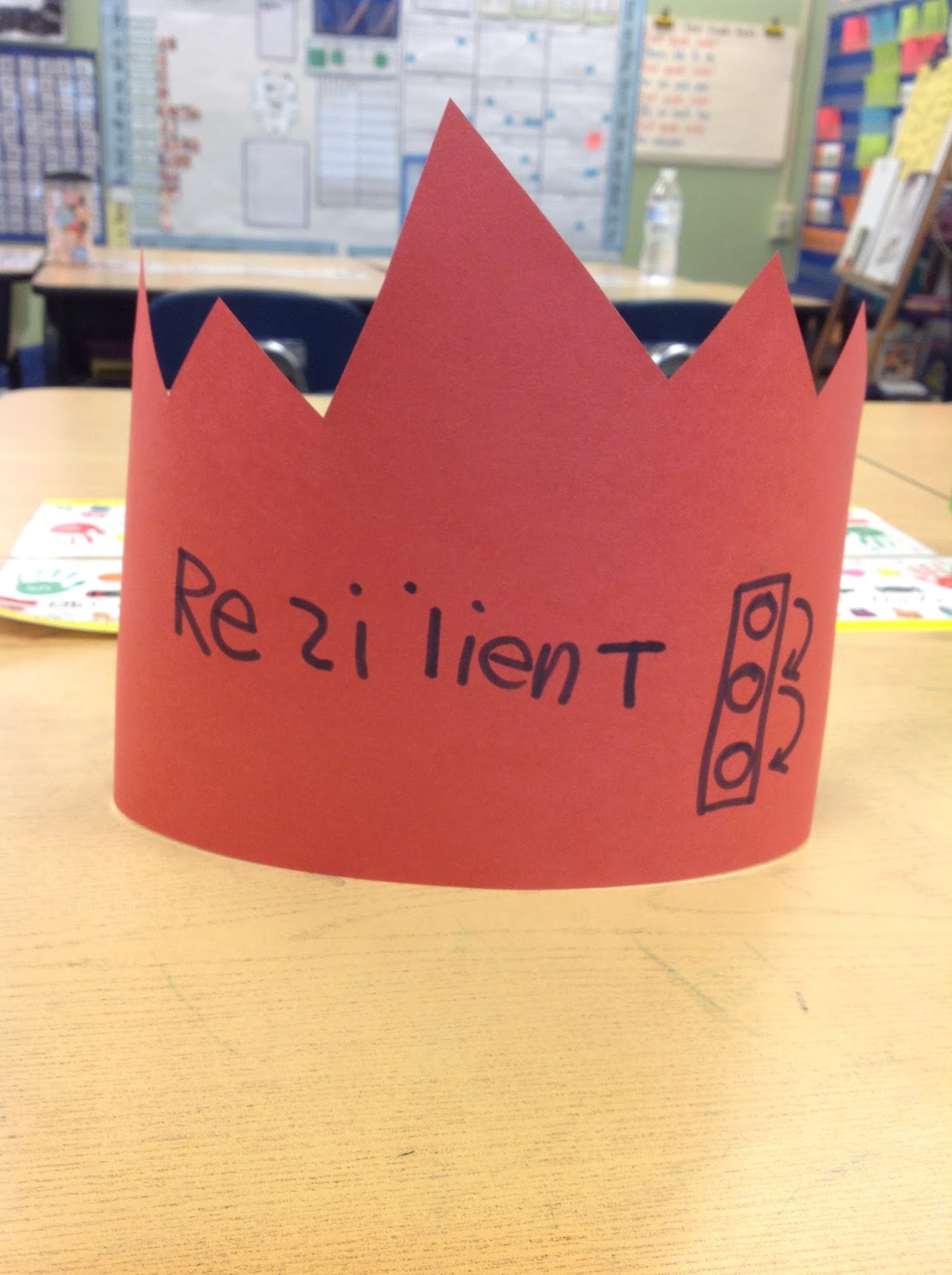
We read What To Do With a Problem and created our resilient crown.


I think this stuff is sinking in. It's a process and there are ups and downs, but I'm feeling good about what I'm depositing into their lives.


Pin It!

Friday, September 8, 2017

Brain Growers: Flexibility

I'm enjoying incorporating growth mindset from A Mindset for Learning into the first several weeks of school. (Check out my post on optimism.) This week we've been learning about flexibility. It's a must-have brain grower for sure. 

Day 1:
We read Stuck by Oliver Jeffers. Our discussion led us into the definition of flexibility, as seen in the picture. We also shared life stories of flexibility.


Day 2:
We read Bunny Cakes by Rosemary Wells. I challenged the kids to find flexibility in the book. Then I paired the kids up and asked them to create paper playgrounds. I told them they'd have chances to use flexibility, and they did.


Day 3: We read Shh! We Have a Plan! by Chris Haughton with the expectation that they look for flexibility. 

Day 4: We watched Beautiful Oops! by Barney Saltzberg on youtube and created our crown to celebrate moments of flexibility.


SaveSave
Pin It!

Saturday, September 2, 2017

Brain Growers: Optimism

Teaching our youngest learners that they can grow their brains is a must. I can hardly imagine a better resource than A Mindset for Learning by Kristine Mraz and Christine Hertz.  


As suggested in the book, I'm teaching my first graders five brain growers. This last week we learned about optimism. I chose to introduce the idea with this video. "Kiddos, watch this video with me to find out how this girl grew her brain." (We only watched the first few minutes.)


After a discussion of what they noticed and learned, we were ready to define optimism. I used the definition and visual given in A Mindset for Learning. We then shared personal stories of optimism.


It was then the perfect time to create our Can poster, a project I've been doing for a few years now. Look here.


Throughout the week, we also read Elephants Cannot Dance by Mo Willems and The Carrot Seed by Ruth Krauss. "Kiddos, let's look for evidence of optimism in this book today."

We also took on the chain challenge. Check it out here. It certainly requires optimism.


Later in the week we used interactive writing to create an optimism crown that's great for celebrating those who are growing their brains. 


I'm looking forward to practicing flexibility next week. Let's grow some brains!

P.S. I published a book for teachers! Look here to check it out.


Pin It!

Saturday, August 26, 2017

Welcome!

In an effort to welcome both students and parents, I created a photo booth of sorts this year. It was simple to make and hung with tape from my ceiling. It was a hit. I think the parents probably enjoyed it slightly more than the first graders, and that's okay with me. I'm not just inheriting 23 learners. I'm also inheriting 23 families.


I published a book for teachers this summer. I'd love to share it with you. Check it out here

Pin It!

Saturday, September 24, 2016

Identity Day

Thursday was an exciting day in Miss McMorrow's first grade class. It was Identity Day. We all shared our identities, which I explained as our passions. I learned some new and valuable things about my kiddos. 


I wasn't exactly sure how to tackle the format, but I think my system worked pretty well. While the class sat on the floor, the presenter shared and then asked for questions. For the sake of time, the audience was allowed two questions. After every fourth presenter, the class was then allowed to visit any of those four, ask additional questions, make comments, and look more closely at any visuals the presenter brought. I put a limit as to how many kids could visit a presenter at a time for various reasons. Smaller groups equal better crowd control, and it ensured that all four presenters would always have an audience. I gave a signal when it was time to switch and visit another presenter. Then we'd repeat the process with four new presenters.

I have George Couros, author of The Innovator's Mindset, to thank for our special day. First off, his book is an inspiring one. Read it. Secondly, considering the time of year, I kept my version of Identity Day fairly simple, but I invite you to read how Couros' whole school participates in Identity Day here and here. His posts will help you catch the vision. 

This is the letter I created for parents.


From sewing to art to horses to Legos. These things motivate and inspire my learners. Now how can I use their passions in the classroom? This is my challenge.


SaveSave
Pin It!

Sunday, September 11, 2016

PR is Real

Public relations in the classroom is a real thing, especially at the beginning of the year. It's hard to please everyone, but I work hard to make a good impression with parents. It's my job to get them on my side as soon as possible which often requires some sacrifice of both time and money, but I know parents notice.

They notice the phone call I make to them before school even starts.

They notice the personalized post card I send to their child before the year begins.

They notice the apple and note I give them at Back to School Night.

They notice the balloon I leave at their child's desk when they meet me for the first time.

They notice the fact that I update our class website daily and add pictures and descriptions of what their child is doing each day.

As the year starts and parents notice the extra things I'm willing to do to make them comfortable with this person who will watch over their child for the next nine months, I'm essentially making deposits to their account. In fact, before school even starts, their accounts are accumulating with positive reasons to trust me. Along the way though, when I make an error or there's some kind of misunderstanding or an issue arises and it feels like a withdrawal is being made, most parents are more likely to show an extra amount of grace because their accounts were already full. This is less likely to happen with an empty account or one running low on funds, and it usually results in a deficit.

So the little extra things we teachers do for the benefit of our parents during the craziest time of the year when there are already a million things on our plates are worth doing. Don't stop, teachers. Parents are important players in this game, and we want them playing for us and not against. 

What types of deposits are you making?


Pin It!

Saturday, September 3, 2016

Wantability

Yesterday while reading Watch Me Throw The Ball by Mo Willems, the substitute next door slipped into the hall and quietly closed her classroom door, because there's only one way to read Watch Me Throw The Ball -- with enthusiasm! I actually considered the door closing to be quite a compliment, and it wouldn't be the first time a teacher's door has done that during one of my read-alouds. 

It's my job to make every book I read aloud come to life, even if that means people down the hall wonder why someone's screaming. "Oh yeah, Miss McMorrow must be reading to her kids again." Once I place that book into some basket on the floor or shelf, I want it to call the name of every little person who heard me read it. That doesn't happen without some passion from the first reader -- me.

I've been a believer of the importance of the teacher's role as a reading salesman for a long long while. This year though I've been throwing my weight into that role. I ramped up the number of daily read-alouds during the first few weeks of school. I checked out over 30 irresistible books from the library. I put 20 of them into a large box on the first day of school with a sign that said Do Not Open (until Friday). And I told the new teacher I'm mentoring about this all-important role she's taking on. If our students can't help but want to read because of how over the top we are about books and our love for them, they'll be more apt to try to be readers, even when it's not easy.

This morning I read a post by Kylene Beers that puts the exclamation point on the end of everything I've been thinking and doing. I love the way she talks about increasing "wantability" before increasing "readability." Read this post. It's short, brilliant, and worth your while.


Wouldn't it be really cool if all our school hallways were filled with the sounds of teachers reading aloud to their kids? Maybe we'd also have more classrooms filled with kids who want to read those same books themselves.


Pin It!

Saturday, August 27, 2016

Books are Irresistible

This summer I had the privilege of hearing Dave Burgess speak about teaching like a pirate. I'd already read his book and was a fan, but hearing him in person brought his message to life. If you've ever sat in one of his audiences, you know what I mean. It's quite memorable. 

So this year I'm aiming to teach more and more like a pirate as I think of my students and how to bridge the gap between their motivations, interests and the curriculum. At the same time, I want to ramp up my sales pitch for reading. I always say the prevention of the summer slide starts on day one. 

On the first day of school, my students found a large box in my room with an important sign attached.


I actually didn't hear too much about the box throughout the week, but on Friday morning Kellen's first words to me were about that box. I also heard from some parents that it was a topic of conversation and anticipation at home. Score!


I made a big deal of the reveal. It was practically a Christmas morning moment. After the opening, I read a few titles to wet their appetite, like Dinosaur vs. The Potty or Vegetables in Underwear. (I was very intentional about the types of books I chose for the box.) The kids responded just like I'd hoped with squeals and laughter. I've a feeling there were some who might have been slightly disappointed that there wasn't indeed a kitty inside, but I'm hoping that my sales pitch is having an affect, even if I can't tell yet.

Then I tried some book speed dating with them. Although it wasn't a fail, it didn't go as beautifully as I had envisioned in my head. I cut it short but gathered some good information nonetheless. I definitely got a good feel for who my readers are. I also noticed those whose interest and stamina are weak. 

Next week, I'll begin reading those books for read-aloud. I imagine some of them will become future favorites, and even my reluctant little ones will begin to experience the fact that books are irresistible.


Pin It!

Sunday, November 1, 2015

Name Envelopes

As all elementary teachers know, names are powerful tools for literacy learning. With the help of Patricia Cunningham I invest several days at the beginning of the year to celebrate and investigate every name in the room. Check out those ideas here.

One year I figured out that I could do something more with those cut-up names than simply send them home.

I put the name into an envelope.
I tape the child's picture to the front so that it can flip up.
I write the child's name underneath the picture. 

The envelopes become part of word work, and kids of all abilities love to put the names together and then check to see if they're right. Once the envelopes become less thrilling, I send them home.


Pin It!

Monday, September 7, 2015

Free Exploration

Many years ago during Math Their Way training, I learned about the power of free exploration. Before I ever ask kids to use math manipulatives for a specific reason or in a specific way, they get to use them for their own purposes. They can explore, be creative, use their imaginations, and play. It honestly does lessen the amount of issues we might have later when I really do need them to use the tools for particular  objectives. 

There are only two rules:

  • We never toss, drop, or throw manipulatives.
  • We never take apart someone else's creation unless they give permission.

I love that the kids use their math skills during free exploration without even trying. They naturally sort, count, build, compare, create patterns, etc. They also use the same creative imaginations that they'll be using in the near future to make up their own math strategies. Also, they must rely on those all-important social skills. It's difficult to successfully pull off free exploration without cooperation and the ability to share.  


Whether at the beginning of the year or at the start of a new unit with new tools, free exploration is a great strategy. 


Pin It!

Saturday, August 29, 2015

Saturday Sayings: Mental Gratitude Journal


Thinking coherently at the end of the first day of school is a challenge, but I know I hit the pillow realistically thinking, I'm going to earn my keep this year. I woke up the next morning and stumbled across a strategy that provided some perspective. While camped out on my couch with a class list in my lap, I thanked God out loud for each of my kids, naming specific gratitude regarding each one. 

I felt bad along the way about those names that made me pause, like the shyest ones who hid within their quiet walls or the ones on the other end of the spectrum who stood out for all the wrong reasons. I attempted genuine gratitude for them all, but I admittedly relied on "I'm thankful for their smile" a few too many times. Granted, I had spent less than seven hours with them, most of that being a blur, but regardless, I felt like I had let some of them down. I purposed that day to teach with a radar awareness for those who are easy to miss as well as for those who need to be seen in a different light than the one their behavior screams for.

On the morning of day three I sat down on my couch again and talked to God about my kids, thanking Him specifically for each one. I recalled moments the day before when I'd smiled in realization about my discovery of gratitude regarding a shy one. Uncovering the positive in a challenging student was just as rewarding. Granted, I still thanked God for some smiles, but I felt the growing gift of knowing my students more and more.

I've daily repeated this mental gratitude journal throughout this first full week of school. Even when I've frustratingly finished a long day, my mind eventually returns to those nuggets of gratitude. They both ground me and provide perspective. They help me figure out who all these little people really are. To be thankful for them is to know and love them all the more and helps me be the teacher they need me to be today and every day.


Pin It!